Surface Temperature Thermometer Explained: A UK Buyer's Guide
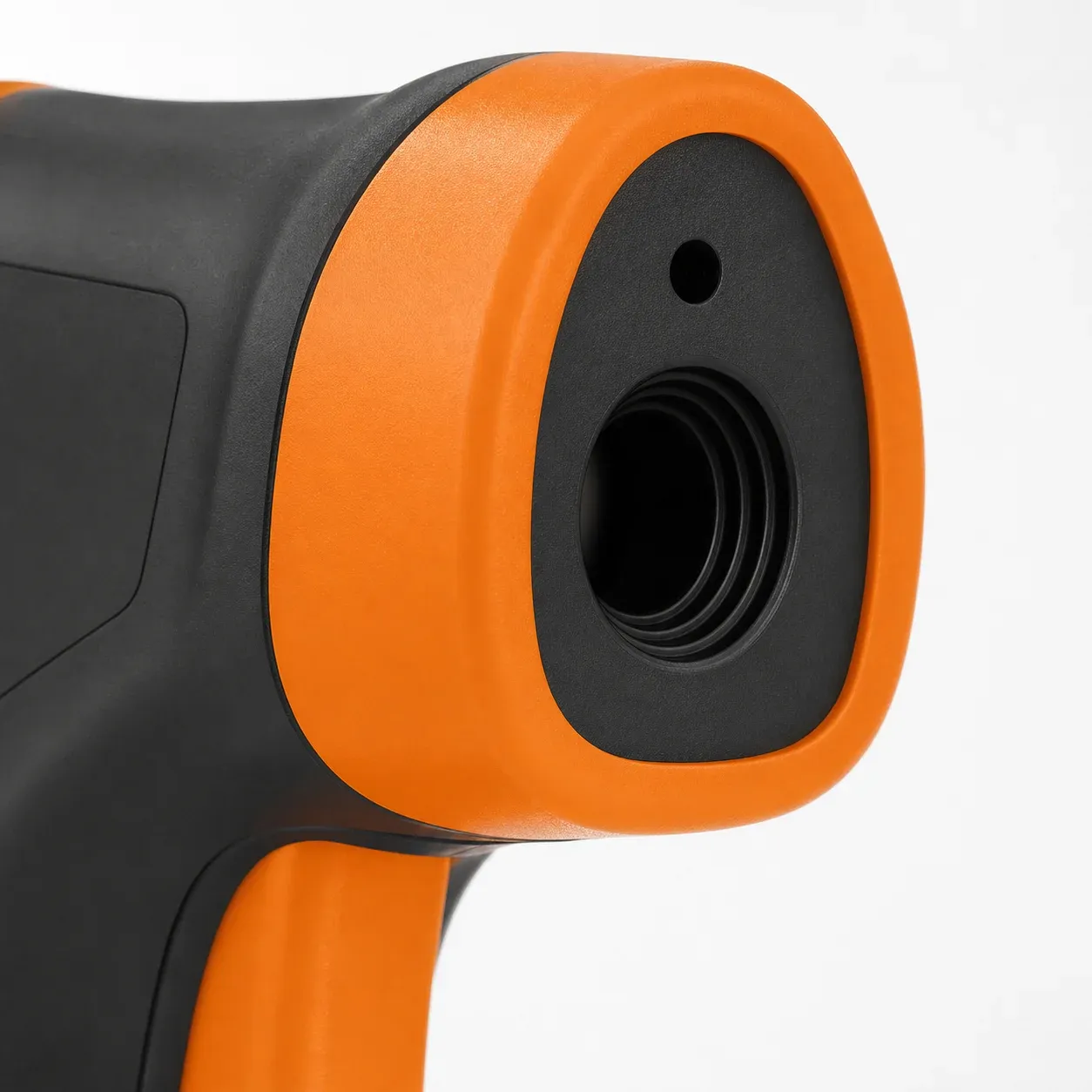
TL;DR: What is a surface temperature thermometer? A surface temperature thermometer is a non-contact diagnostic device that measures the thermal infrared energy emitted directly from an object's surface, instantly converting it into a temperature reading. Based on our testing at BTMeter UK, it is the safest and most efficient tool for UK tradespeople to accurately check live electrical panels, HVAC pipework, and moving automotive parts without physical contact.
Key Takeaways
- A surface temperature thermometer measures the temperature of an object’s surface, not the surrounding air.
- For UK trades, the most important buying factors are emissivity control, distance-to-spot ratio, accuracy, response time and a clear display.
- Bluetooth logging is exceptionally useful when you need to record readings for HVAC checks, electrical diagnostics or automotive fault-finding.
- Shiny metals, glossy paint and reflective surfaces can distort infrared readings unless you account for emissivity.
- According to UK industry guidelines for regulated work, always choose a model that fits your site procedures and calibration requirements, then verify readings against a known reference.
When a boiler plant is running hot, a breaker feels warmer than expected, or a vehicle component is heating unevenly, you need a reading you can trust there and then. Consequently, that is where a surface temperature thermometer earns its keep. It gives UK professionals a fast way to measure the temperature of pipes, panels, motors, heat exchangers and other surfaces without slowing the job down.
At BTMeter UK, that matters because our extensive testing shows that many customers need more than just a quick number on a screen. Furthermore, they need a measurement that can be saved, compared and explained later, especially when a reading forms part of HVAC diagnostics, electrical maintenance or fleet work. If you want the wider technical background, our pillar guide to digital pyrometers in the UK is the best place to start. Therefore, this article stays tightly focused on what a surface temperature thermometer does, how to buy one in the UK, and how to use it properly.
Used well, it saves valuable time. Conversely, used badly, it can lead you towards the wrong fault. That difference is usually down to a few practical details: the surface finish, the measurement distance, the size of the target and whether the instrument truly suits the task.
What Does a Surface Temperature Thermometer Measure?
A surface temperature thermometer measures the thermal energy emitted by an object’s surface and converts it into a temperature reading. In everyday trade use, that makes it ideal for checking things like pipework, radiators, circuit housings, motors, brake components and insulation faults. Importantly, it is not measuring the temperature of the surrounding air, and it is certainly not the same as a clinical thermometer.
What is the Difference Between Surface Temperature and Air Temperature?
This distinction matters more than many first-time buyers realise. For instance, a room may feel cool, but a metal casing in direct sunlight can read much hotter. Similarly, a draughty loft might feel cold, while a patched area of insulation could still be retaining heat. Ultimately, a surface temperature thermometer is useful because it tells you exactly what the object itself is doing, not what the room happens to feel like.
For property checks, that helps you find heat loss paths. For engineering work, it helps you identify hot spots, uneven heating and overloaded components. Additionally, for automotive diagnostics, it helps you compare one part of an engine bay against another without waiting for a contact probe to stabilise.
Why Do UK Buyers Choose Non-Contact Measurement?
In a busy UK workshop or plant room, speed and safety are often the primary reasons. According to UK health and safety guidelines, minimising contact with live or hazardous machinery is crucial. Non-contact measurement lets you check a live or difficult-to-reach component without opening up every panel or interrupting the system for long. As a result, that can be a real advantage on time-sensitive jobs, provided you understand the limits of the device and measure from the correct distance.
How Does a Surface Temperature Thermometer Work?
Most modern surface temperature thermometers use infrared sensing technology. The device reads the infrared energy given off by the surface and uses an internal algorithm to estimate the temperature. On a straightforward, matt surface, the reading is usually simple and highly accurate. However, on a reflective or polished surface, the measurement becomes much more sensitive to setup and technique.
How Does Emissivity Affect Temperature Readings?
Emissivity describes how efficiently a surface emits infrared energy. Dark, matt materials tend to give more reliable readings. On the other hand, shiny stainless steel, polished aluminium, copper and chrome can reflect surrounding heat sources and confuse the sensor. In practical terms, that means a surface temperature thermometer is only as accurate as your understanding of the target material.
Based on our field testing, if you regularly work on mixed materials, you should always look for a model with adjustable emissivity. If you mainly need repeatable checks on similar surfaces, make sure the device is consistent and simple to set up. That is especially important on UK job sites where readings may need to be repeated by another engineer or added to a formal service record.
What is the Distance-to-Spot Ratio?
The distance-to-spot ratio tells you how much surface area the thermometer is measuring from a given distance. If you stand too far away, the sensor may average the temperature across a wider area than you intended. Consequently, that can hide a critical hot joint, a cold patch or a failing bearing.
As a general rule, the smaller the component, the closer and more carefully you need to measure. This is precisely why industrial users often prefer models with a clear laser aim and a strong spot ratio. For a deeper product-level breakdown, see Industrial IR Thermometer Explained: A UK Buyer’s Guide.
Why Does Response Time Matter on Fast-Moving Jobs?
A high-quality surface temperature thermometer should provide a stable reading almost instantly. That is incredibly useful when components cool down fast after shutdown, or when you need to compare several points in a rapid sequence. Furthermore, a fast response time makes the device much easier to use in commissioning work, where repeated checks are often mandated before a system is officially signed off.
For trade work, the best reading is the one that is both repeatable and explainable. If you cannot justify the setup, the number is less useful than it looks.
How to Choose the Best Surface Temperature Thermometer in the UK
Buying in the UK is not just about finding the lowest price. Rather, it is about matching the device to the specific jobs you actually do, then checking that the specification makes sense for British working conditions, British maintenance practices and your own internal calibration regime.
What Temperature Range and Accuracy Do You Need?
Start by evaluating the range. A unit intended for domestic checks may be perfectly fine for radiators and fridges, but it will fall short for electrical cabinets, motors or heavy engine diagnostics. In our experience, industrial users usually require a wider temperature span and a specification that stays highly credible at both the low and high extremes.
Accuracy matters immensely too, but it should always be read alongside repeatability and proper use. A thermometer that claims excellent accuracy on paper is not much use if the setup is inconsistent. Always check whether the product data clearly states the accuracy band and whether it is truly suitable for the temperature range you plan to measure.
Do You Need Adjustable Emissivity for Mixed Materials?
If you work on painted steel one day and bare metal the next, adjustable emissivity is a major advantage. Ultimately, it lets you tune the tool to the exact surface rather than forcing every reading through the same default setting. That is one of the key reasons experienced UK engineers often prefer a digital pyrometer over a bare-bones thermometer without this feature.
Ready to upgrade your diagnostics with {brand_name}?
Upgrade Your Toolkit — £62.99