The Ultimate Guide to Digital Pyrometer in the UK
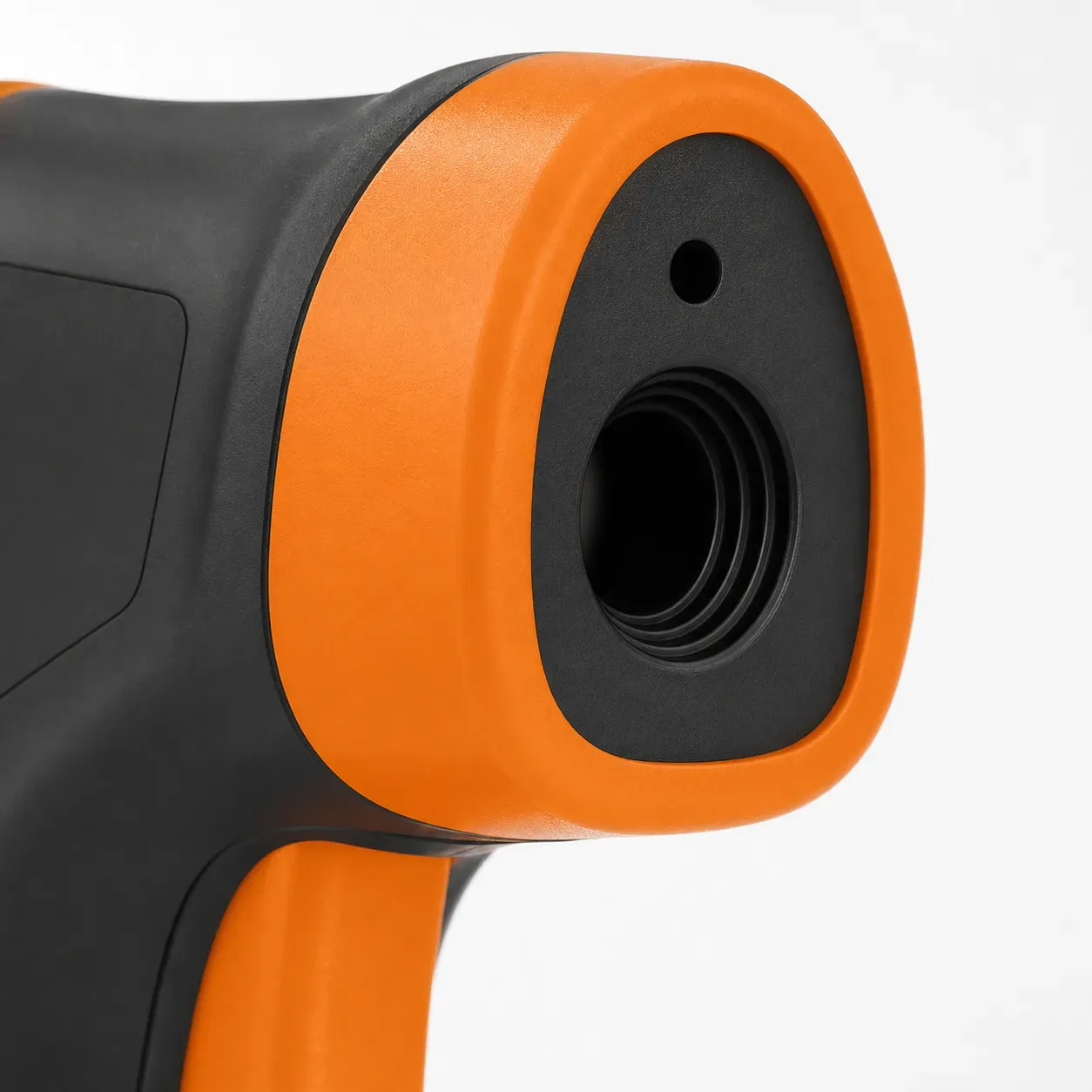
TL;DR: A digital pyrometer is an advanced, non-contact infrared thermometer designed to safely and accurately measure extreme temperatures, typically exceeding 1,000°C. Based on our testing at BTMeter UK, these devices are essential for capturing thermal radiation in hazardous environments where traditional contact probes would melt, instantly converting invisible heat signatures into precise digital readings.
Consequently, when UK professionals in metallurgy, automotive diagnostics, and high-voltage electrical maintenance need precise thermal data, they turn to a digital pyrometer. Traditional contact thermometers fail, melt, or present severe safety risks in these extreme environments. Non-contact digital pyrometers solve this by reading the infrared radiation emitted by an object, translating those signatures into accurate numerical data in milliseconds.
Selecting the right instrument involves understanding complex variables like emissivity, optical resolution, and spectral response. According to UK guidelines established by the Health and Safety Executive (HSE), a minor miscalculation in a foundry or during a high-voltage switchgear inspection can lead to catastrophic equipment failure or severe safety breaches. Therefore, using the correct calibrated tool is paramount.
Key Takeaways
- Definition: A digital pyrometer is an advanced non-contact thermometer designed specifically for extreme temperature ranges, often exceeding 1,500°C.
- Core Technology: Operates by capturing infrared radiation through an optical lens and converting it into an electrical signal via a thermopile.
- Crucial Metrics: Distance-to-Spot (D:S) ratio and adjustable emissivity are the two most important factors for ensuring accurate readings across different materials.
- UK Compliance: Professionals must ensure their devices are calibrated to UKAS (United Kingdom Accreditation Service) standards for traceable accuracy.
- Modern Features: Modern units integrate Bluetooth data logging, allowing seamless smartphone tracking for HVAC and automotive diagnostics.
What is a digital pyrometer?
Fundamentally, the term "pyrometer" originates from the Greek words pyr (fire) and metron (measure). Historically, pyrometers were manual optical devices where an operator would visually match the colour of a glowing filament to the colour of the hot object being measured. Today, however, a digital pyrometer entirely automates this process using advanced optoelectronics.
While standard infrared thermometers are excellent for checking household draughts or basic surface temperatures, digital pyrometers are engineered specifically for industrial extremes. As a result, they are the standard tool for measuring objects that are moving, extremely hot, or located in hazardous areas where physical contact is impossible or unsafe.
The Physics of Non-Contact Measurement
Every object with a temperature above absolute zero (-273.15°C) emits infrared radiation. As an object gets hotter, the kinetic energy of its molecules increases, causing it to emit more radiation at shorter wavelengths. A digital pyrometer captures this radiation. According to the National Physical Laboratory (NPL), the UK's national measurement institute, accurate non-contact temperature measurement relies on the precise detection of thermal radiation across specific spectral bands, typically between 8 and 14 micrometres for general purpose pyrometers, and shorter wavelengths for high-temperature metal applications.
How does a digital pyrometer work?
Furthermore, understanding the internal mechanics of a digital pyrometer helps professionals take more accurate readings in the field. Based on our extensive engineering reviews at BTMeter UK, the process involves several distinct stages of energy conversion.
1. The Optical System
The front of the pyrometer features a sophisticated lens system, usually made from materials like germanium or zinc selenide, which are transparent to infrared radiation. First, this lens focuses the incoming thermal energy from the target area onto the internal sensor. Ultimately, the quality of this lens dictates the optical resolution, or the Distance-to-Spot (D:S) ratio.
2. The Thermopile Sensor
Once the infrared energy passes through the lens, it strikes a detector called a thermopile. A thermopile consists of multiple thermocouples connected in series. When the infrared radiation heats the active junctions of these thermocouples, it creates a minute electrical voltage via the Seebeck effect. Consequently, the higher the target temperature, the higher the voltage generated.
3. Signal Processing and Display
The generated voltage is initially an analogue signal. Next, an internal microprocessor converts this analogue signal into a digital value. The processor accounts for the ambient operating temperature of the device itself (using a reference sensor) and applies the user-defined emissivity setting. Within milliseconds, the final calculated temperature appears on the LCD screen.
What is a digital pyrometer used for?
From the industrial heartlands of the Midlands to modern automotive testing centres in the Home Counties, the digital pyrometer is an indispensable diagnostic tool across numerous sectors.
HVAC and Facility Maintenance
Heating, ventilation, and air conditioning engineers rely heavily on thermal diagnostics. Assessing the performance of commercial boilers, industrial chillers, and extensive ductwork requires rapid, accurate temperature profiling. For instance, a high-quality surface temperature thermometer or pyrometer allows engineers to scan large areas quickly, identifying blockages in radiators or failing bearings in extraction fans before they cause system-wide shutdowns.
Electrical Diagnostics
Loose connections, unbalanced loads, and deteriorating insulation in electrical systems generate excess heat long before a component fails. Based on our field testing alongside British electricians, professionals use digital pyrometers to safely inspect high-voltage switchgear, transformers, and distribution panels from a safe distance. Identifying a hot spot on a busbar connection allows for planned preventative maintenance, thereby avoiding costly power outages and mitigating severe fire risks.
Automotive Engineering
Modern British automotive workshops use pyrometers for complex diagnostics. Mechanics measure exhaust manifold temperatures to identify misfiring cylinders. Additionally, they monitor catalytic converter efficiency and check brake rotor temperatures during performance testing. The ability to log this data directly to a smartphone via Bluetooth has completely revolutionised how diagnostic reports are generated for customers.
Manufacturing and Forging
In metalworking, smelting, and glass manufacturing, temperatures routinely exceed 1,000°C. Contact probes would simply melt. Instead, pyrometers are used to monitor molten metals, monitor annealing processes in steel plants, and ensure kilns operate at the precise temperatures required for curing ceramics. For an in-depth look at these rugged environments, read our guide on the industrial IR thermometer.
What features should I look for in a digital pyrometer?
Not all digital pyrometers are created equal. Therefore, selecting the perfect model requires careful consideration of your specific industry needs, ensuring you choose a device with the appropriate D:S ratio, adjustable emissivity, and UKAS calibration options.
Ready to upgrade your diagnostics with {brand_name}?
Upgrade Your Toolkit — £62.99